.svg)





.png)
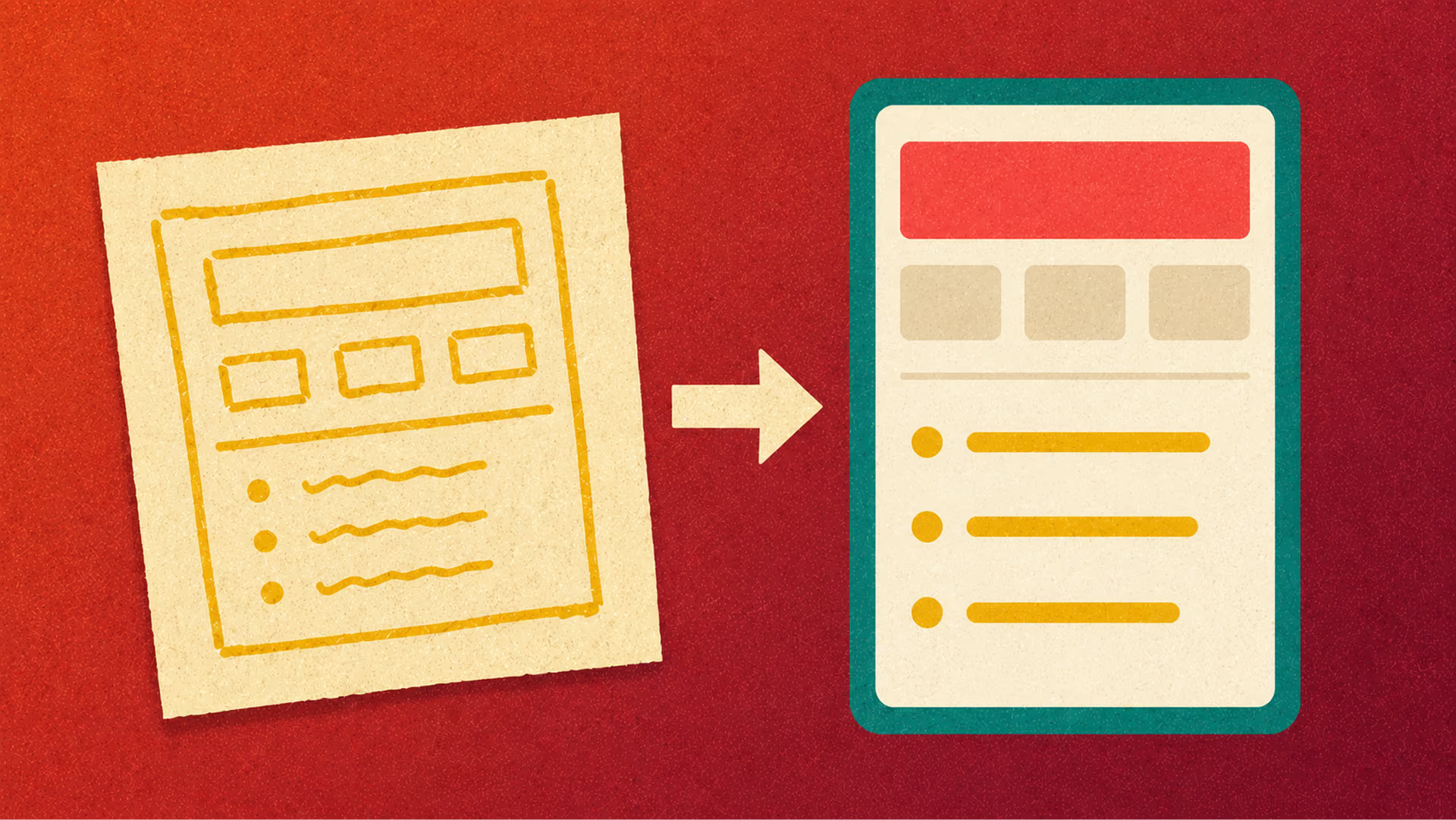
Building an app used to mean months of coding, expensive developers, and endless technical headaches. But today, thanks to no-code platforms, anyone with a good idea can turn it into a fully functional app without writing a single line of code. From managing finances to connecting communities, no-code apps are transforming the way businesses, creators, and entrepreneurs launch products. In this article, we will explore real-life examples of successful no-code apps across different industries.
WeHive
WeHive is a social app made to help people connect, collaborate, and engage with their community. What makes it special is how it was built. The creators used Dittofi, a no‑code tool that lets you make full apps without writing traditional code. With Dittofi, they could design the app, set up the database, and create workflows all visually. The tool then automatically generates the actual code behind the scenes. This means WeHive works like a normal app, but could be built much faster than if it were hand-coded. It also made it easy for the team to try new features, fix issues, and improve the app quickly based on user feedback.
.jpg)
Using no-code tools also made complex features simpler to build. Things like real-time chat, event bookings, and social feeds were all created visually without deep programming knowledge. WeHive shows that you don’t need to write tons of code to make a professional, reliable, and scalable app.
Comet App
Comet is a dynamic platform that helps companies discover and hire top freelance tech experts. It bridges the gap between talented professionals and projects worldwide. The platform itself was built using Bubble, a powerful no-code tool that allows the creation of fully functional apps without writing a single line of code. All the features of this app, like user dashboards, project matching algorithms, secure payment systems, and global collaboration tools are designed visually and launched rapidly.
Most no‑code tools are associated with simple prototypes or small internal apps, but Comet broke that stereotype. Instead, it showed that a complex marketplace with user accounts, search, matching, payments, and workflow management can be launched and scaled using no‑code.
HelloPrenup
HelloPrenup is a great example of a real, production‑ready app built with no‑code tools, and the way it was built highlights why no‑code is becoming a serious option for founders. The founders used Bubble, a visual no‑code platform that lets you design and launch full web applications using drag‑and‑drop workflows, database management, and responsive design tools without traditional programming. Using Bubble, HelloPrenup’s CTO was able to assemble the entire front‑end user experience and the underlying database logic in just a few months. This is a development speed that would have taken far longer with conventional coding.
Still, HelloPrenup shows that no‑code isn’t just about skipping code entirely, it’s about strategically using no‑code where it makes sense and combining it with custom logic where needed. While most of the site’s interface and backend workflows are handled inside Bubble, the team built a custom API to process complex legal data and state‑specific prenuptial logic, integrating it seamlessly with the no‑code system. This hybrid approach gave HelloPrenup the speed and flexibility of no‑code development while still allowing the app to meet the nuanced legal requirements its users depend on.
Qoins
Qoins is a fintech app that helps users pay down debt by automatically rounding up purchases and applying the extra change toward loans. Remarkably, the first version of Qoins was built entirely using Bubble, a popular no-code platform. Bubble allows founders to visually design the app interface, set up databases, and create workflows, all without writing traditional code. For Qoins, this meant handling tasks like calculating rounded-up amounts, scheduling payments, and managing user accounts, all through a visual, drag-and-drop system.
Using no-code gave the founders a huge advantage; they could launch quickly, test their idea, and iterate based on real user feedback without hiring a full development team. Even as the app grew, Bubble continued to support its core functionality, proving that no-code tools can handle complex financial logic and secure workflows. Qoins is now a classic example of how no-code platforms can empower entrepreneurs to build sophisticated fintech solutions efficiently, cost-effectively, and at scale.
Goodgigs
GoodGigs was built as a no‑code app. Its founder, Dale Wilkinson, used Bubble to create the platform quickly without traditional programming. On Bubble, you can visually design pages, set up user workflows, manage databases, and add features such as job listings or user profiles entirely without writing code. Bubble lets creators connect elements like forms and data so that users can browse purpose‑driven job opportunities, submit applications, or interact with community features, all through a visual interface instead of manually coding front‑end and back‑end logic. Because of this no‑code foundation, GoodGigs was able to launch rapidly and iterate on features like searchable job boards, company listings, and member interactions without needing a full engineering team.
In short, GoodGigs is a real example of a no‑code job board built on Bubble, demonstrating how no‑code tools can power two‑sided marketplace apps that connect people with social‑impact careers effectively.
LetterHunt
LetterHunt is a child-focused educational app that turns learning letters, words, and literacy into an engaging digital experience. It was built using Softr, a no-code platform that converts Airtable databases into interactive web and mobile apps. With Softr, creators can visually design interfaces, manage interactive content, and control user access without programming. Airtable stores the lessons, letter exercises, and progress tracking, while Softr handles the presentation layer, quizzes, and gamified learning workflows. No-code tools allow LetterHunt to provide a polished, interactive learning environment that can easily adapt to new content or exercises.
The main advantage of no-code here is speed and flexibility. The team can update content, add new games, and track progress without developers. This ensures that learning apps for children remain fun, engaging, and scalable. LetterHunt exemplifies how no-code can bring educational apps to life efficiently while keeping maintenance and updates simple.
Kawenter - eVisa & Flight App
Kawenter is a travel app that simplifies visa applications and flight bookings, allowing users to manage travel documents, schedules, and notifications all in one place. The app was built using FlutterFlow, a no-code platform that enables founders to design mobile apps visually without writing traditional code. FlutterFlow allows creators to build user interfaces, set up navigation, integrate APIs, and manage data in a drag-and-drop environment. Using FlutterFlow, the Kawenter team could create interactive visa application forms, flight booking workflows, and real-time status updates quickly and efficiently.
The no-code approach also gave Kawenter the flexibility to iterate and scale easily. New visa categories, updated forms, and airline integrations can be added visually without touching backend code. By using FlutterFlow, the founders could launch the app faster, reduce development costs, and maintain a polished, user-friendly experience for travelers. Kawenter demonstrates how modern no-code platforms can handle complex workflows, like travel documentation and flight management, while saving time and resources for founders.
My Nursery App
My Nursery App is designed for parents and children, offering educational activities, nursery information, and interactive learning tools. The app was built using a no-code tool, Adalo. This platform allows creators to visually design mobile apps without writing traditional code. With Adalo, the team could create user-friendly interfaces, set up lesson and nursery databases, and implement features such as activity tracking, user profiles, and notifications, all through drag-and-drop tools and visual workflows. This allowed the founders to focus on delivering engaging content rather than worrying about backend development.
Using Adalo also made it easy to update and scale the app. New activities, lesson plans, or nursery listings can be added quickly, while automated notifications help parents stay informed about schedules and updates. The no-code approach ensures fast iteration, reduced development costs, and a smooth, interactive experience for both parents and children.
Beelango
Beelango is a scalable, interactive language-learning platform that teaches Arabic and Hebrew through courses covering reading, writing, and speaking. The app was built entirely using Bubble, a no-code platform, showing that sophisticated, user-facing apps can be created without traditional coding. Bubble allowed the founders to develop complex features such as voice recognition, interactive exercises, and dynamic lesson flows, all within a visual, drag-and-drop environment. With over 100 interactive activities, the app provides a rich and engaging learning experience, proving that no-code tools can support robust functionality in educational technology.
Founder Jonathan Mina demonstrates that no-code platforms like Bubble can be used to create high-performing EdTech products that are fast to launch, easy to maintain, and capable of handling large user bases. By leveraging no-code, Beelango can iterate on lessons, add new activities, and enhance interactivity quickly, all while keeping costs and technical complexity low. It stands as a prominent example of how no-code tools can deliver complex, scalable, and profitable apps in the education space.
Flexiple
Flexiple is a marketplace that connects skilled freelancers, developers, and designers with companies looking for top talent. What’s impressive is that the platform was created using Bubble, a no-code tool. Bubble made it possible to build user dashboards, manage freelancer profiles, post and track projects, and even handle client-freelancer matching visually. This allowed the team to focus on making the platform intuitive and efficient rather than getting bogged down in technical details.
.png)
No-code also gave Flexiple the flexibility to grow and improve quickly. Features like skill filtering, reviews, and automated notifications could be added in days instead of months. The platform now runs smoothly with dynamic workflows and payment processes, proving that no-code tools like Bubble are capable of handling complex marketplaces.
From Idea to Impact - The No-Code Revolution
These examples prove that no-code platforms have transformed app development, enabling anyone with a great idea to create fully functional, scalable, and professional applications without writing traditional code. The success of these apps shows that no-code platforms are not just for prototypes, they are a serious option for building complex, real-world applications. In short, no-code is leveling the playing field, turning ideas into impact, and proving that anyone can be an app creator.
Or save this article as a PDF for future research, workshops and strategy sessions









.svg)